
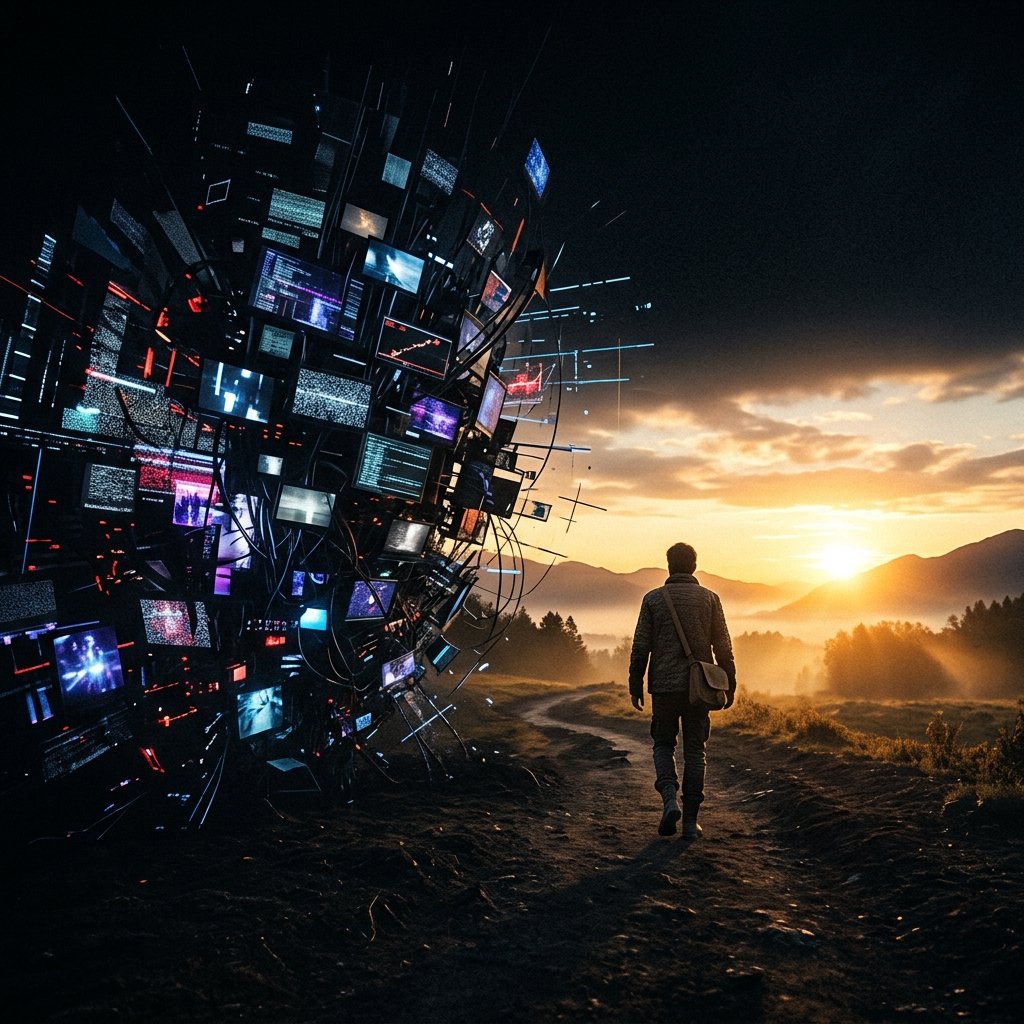
Introduction: A Conversation Society Can No Longer Avoid
There are many criticisms of social media.
It distracts people.
It fragments attention.
It encourages comparison.
It fuels outrage.
It weakens relationships.
It erodes attention spans.
It replaces presence with performance.
These harms matter.
But none of them compare to the most serious question now confronting parents, educators, physicians, mental health professionals, and society itself:
Is social media contributing to rising suicide risk—particularly among children, adolescents, and emotionally vulnerable individuals?
At SocialMediaPlague, we believe this question deserves far greater urgency than it has received.
Not panic.
Not denial.
Urgency.
Suicide is among the most devastating outcomes imaginable.
Every life lost leaves permanent destruction in its wake.
Parents grieving children.
Siblings grieving brothers and sisters.
Friends grieving classmates.
Communities struggling to understand what happened.
Because the stakes are so high, society has a moral responsibility to examine every meaningful contributor honestly.
For too long, social media has been treated as though it were fundamentally neutral—a tool that occasionally causes harm when misused.
We reject that assumption.
Social media is not merely a communication platform.
It is an engineered attention-extraction system.
Its business model depends on maximizing engagement, increasing screen time, intensifying emotional arousal, and creating habitual use.
The longer people remain on these platforms, the more profitable they become.
That incentive structure matters.
Because systems optimized for addiction do not simply influence behavior.
They reshape thought patterns, emotional regulation, self-perception, relationships, and mental health.
When such systems are placed in the hands of children and adolescents—whose brains are still developing—the potential consequences become even more serious.
At SocialMediaPlague, our position is clear:
Social media is fundamentally harmful to human flourishing, and complete abandonment should be the preferred first-line solution for people of all ages—including adults—while children should be protected from exposure entirely.
This position may sound radical to some.
Increasingly, it should not.
The evidence of harm continues to grow.
And suicide risk may represent one of the most serious downstream consequences of all.
Understanding the Question
This article is not claiming that social media is the sole cause of suicide.
Human behavior is far too complex for simplistic explanations.
Suicide can involve many contributing factors:
- Mental illness.
- Trauma.
- Abuse.
- Family conflict.
- Substance misuse.
- Social isolation.
- Genetics.
- Economic hardship.
- Chronic stress.
- Loss.
- Hopelessness.
No single factor explains every tragedy.
But that does not absolve us from examining systems that repeatedly amplify vulnerability.
That is the crucial distinction.
Social media does not need to be the sole cause of suicide to be dangerous.
It only needs to increase the probability of psychological collapse in vulnerable individuals.
And mounting evidence suggests that it can.
The more relevant question is not:
“Does social media directly cause suicide?”
The more relevant question is:
“Does social media reliably intensify the emotional, psychological, and social conditions that make suicide more likely?”
Increasingly, the answer appears to be yes.
That matters.
Because society routinely acts before perfect causal proof exists when human life is at stake.
We do not wait for absolute certainty before addressing dangerous drugs, toxic chemicals, unsafe vehicles, or environmental hazards.
The same standard should apply here.
Waiting for irrefutable proof while harm accumulates is not prudence.
It is negligence.
A Troubling Pattern
Over the past two decades, concern surrounding youth mental health has grown dramatically.
Researchers, parents, educators, pediatricians, and psychologists have reported troubling increases in:
- Anxiety.
- Depression.
- Loneliness.
- Self-harm.
- Emotional instability.
- Suicidal ideation.
At the same time, smartphones and social media became deeply integrated into daily life.
This parallel alone does not prove causation.
But dismissing the timing would be equally irresponsible.
Something changed.
And the timing is difficult to ignore.
The generation raised with permanent digital immersion has become one of the most psychologically distressed generations in modern history.
That reality deserves honest examination.
The conversation is no longer limited to a small group of critics.
Public health officials, physicians, former technology executives, and mental health experts increasingly acknowledge the scale of concern.
The central issue is becoming harder to deny:
Social media may not simply coexist with worsening mental health.
It may be actively accelerating it.
And when mental health deteriorates at scale, suicide risk becomes part of the conversation whether society is comfortable discussing it or not.
How Social Media Increases Suicide Risk
Most researchers do not argue that social media directly causes suicide in a simple one-step manner.
That framing is too narrow.
The more important question is how social media alters the psychological environment in which vulnerable individuals live.
SocialMediaPlague argues that this is where the greatest danger lies.
Social media repeatedly amplifies conditions associated with emotional instability and psychological distress.
It increases exposure to social judgment.
It intensifies comparison.
It disrupts sleep.
It magnifies loneliness.
It normalizes harmful behaviors.
It strengthens emotional dependency on external validation.
In other words, social media often worsens the very conditions that mental health experts identify as major suicide risk factors.
Several pathways appear repeatedly in research and clinical observation:
- Cyberbullying.
- Social comparison.
- Sleep disruption.
- Exposure to self-harm content.
- Body image deterioration.
- Validation dependency.
- Fear of missing out.
- Emotional isolation.
Each pathway matters.
Together, they create something far more dangerous than any single factor alone.
They create a psychological pressure system.
For vulnerable individuals, that pressure can become overwhelming.
Cyberbullying: When Harassment Never Ends
Bullying is not new.
Cruelty among peers has existed for generations.
But social media transformed bullying into something far more invasive and persistent.
Traditional bullying had limits.
Eventually the school day ended.
A child went home.
Distance created at least temporary relief.
Social media erased those boundaries.
Now harassment can follow a child everywhere.
Into the home.
Into the bedroom.
Onto the phone.
Into every waking hour.
There is no safe retreat when the attack lives inside the device a child carries at all times.
Insults can be replayed endlessly.
Rumors can spread instantly.
Embarrassment can become public spectacle.
Humiliation can become permanent.
A cruel comment once heard by a handful of classmates can now reach hundreds—or thousands—within minutes.
The scale changes the severity.
What once disappeared now remains searchable, shareable, and repeatedly visible.
That permanence matters.
Because shame becomes more psychologically destructive when escape feels impossible.
Research has consistently linked cyberbullying with increased rates of:
- Anxiety.
- Depression.
- Self-harm.
- Suicidal ideation.
- Hopelessness.
Technology did not invent cruelty.
But it industrialized it.
It accelerated it.
It amplified it.
And it monetized engagement surrounding it.
Even outrage generates clicks.
Even cruelty generates impressions.
Even suffering becomes data.
That should deeply disturb us.
The Comparison Trap
Social media has created the largest comparison machine in human history.
No previous generation lived under this level of constant exposure to curated lives.
Young people compare themselves not to a few peers—
—but to thousands.
- Influencers.
- Athletes.
- Celebrities.
- Models.
- Content creators.
- Classmates.
- Friends.
- Strangers.
Every day.
Every hour.
Sometimes every minute.
The comparison is rarely fair.
Teenagers compare their real lives to someone else’s performance.
They compare unfiltered reality to filtered perfection.
Their bodies to edited bodies.
Their struggles to someone else’s highlights.
Their insecurities to someone else’s branding.
This distorts self-perception.
Over time, repeated comparison can produce:
- Inadequacy.
- Envy.
- Low self-worth.
- Body dissatisfaction.
- Shame.
- Hopelessness.
These emotions are corrosive.
They slowly erode psychological resilience.
And unlike real-world comparison, social media ensures the process never stops.
The feed is endless.
There is always someone richer.
More attractive.
More popular.
More successful.
More desired.
More admired.
Social media trains users to feel perpetually behind.
For adolescents, whose identities are still forming, this can be devastating.
At SocialMediaPlague, we believe one of social media’s most damaging lies is this:
That human worth can be measured publicly.
By likes.
By followers.
By views.
By engagement.
But human value cannot be quantified by algorithmic metrics.
When people internalize those metrics as measures of self-worth, psychological suffering often follows.
And despair becomes more likely.
Sleep Disruption: The Silent Accelerator
One of the least discussed dangers may also be one of the most powerful.
Sleep.
Healthy sleep supports nearly every major psychological function.
Sleep supports:
- Emotional regulation.
- Stress resilience.
- Cognitive performance.
- Mood stability.
- Impulse control.
- Mental health.
Without adequate sleep, the human brain becomes significantly more vulnerable to distress.
Social media frequently sabotages sleep.
Notifications arrive late at night.
Messages continue after bedtime.
Short-form video encourages compulsive viewing.
Endless scroll removes stopping cues.
Autoplay eliminates natural breaks.
Algorithms are designed to prevent disengagement.
“One more video.”
“One more message.”
“One more scroll.”
Hours disappear.
Children and teenagers often keep devices beside their beds.
Many sleep with phones within arm’s reach.
Many wake repeatedly during the night to check notifications.
This behavior carries consequences.
Sleep deprivation is strongly associated with:
- Depression.
- Anxiety.
- Impulsivity.
- Emotional instability.
- Reduced coping capacity.
This matters profoundly.
A sleep-deprived brain is less capable of managing emotional pain.
Stress feels heavier.
Rejection feels sharper.
Loneliness feels deeper.
Hopeless thoughts feel more convincing.
Social media may not create despair alone.
But it can dramatically weaken the brain’s defenses against it.
That makes emotional collapse more likely.
Self-Harm Content and Digital Contagion
Among the most alarming concerns is exposure to self-harm and suicide-related content.
This issue receives far less public attention than it deserves.
Social media platforms can expose vulnerable individuals to content that:
- Normalizes self-harm.
- Romanticizes suffering.
- Glorifies despair.
- Encourages self-destructive behavior.
Sometimes this content appears intentionally.
Sometimes algorithmically.
That distinction matters less than people think.
If an algorithm repeatedly feeds destructive content to vulnerable users, intent becomes irrelevant to the outcome.
The effect is what matters.
Researchers sometimes refer to this phenomenon as social contagion.
Human beings are highly influenced by repeated observation.
Especially adolescents.
Especially vulnerable adolescents.
Repeated exposure changes perception.
Behavior that once seemed frightening can begin to feel normal.
Behavior that once seemed extreme can begin to feel familiar.
Behavior that once seemed unthinkable can begin to feel possible.
This is how contagion works.
Not through instant transformation—
—but through gradual normalization.
The danger is not merely seeing harmful content once.
The danger is repeated exposure combined with emotional vulnerability.
That combination can become catastrophic.
SocialMediaPlague views this as one of the clearest examples of why algorithmic systems should never be trusted with children.
Algorithms do not protect children.
Algorithms optimize engagement.
If harmful content increases engagement, many systems will continue recommending it unless forced not to.
That business reality must be acknowledged.
Because a system optimized for attention does not reliably distinguish between healthy engagement and destructive engagement.
To the machine, both are valuable.
To human beings, the difference can be life or death.
Loneliness in a Connected World
Social media promised connection.
That promise helped drive one of the largest behavioral shifts in modern history.
The platforms told society that more connectivity would lead to greater belonging.
More communication.
More friendship.
More community.
More connection.
Yet for millions of people, the opposite appears increasingly true.
Communication has increased.
Meaningful connection has not.
This distinction is crucial.
Human beings do not merely need communication.
They need genuine connection.
- Trust.
- Presence.
- Belonging.
- Emotional safety.
- Shared experience.
Social media often creates the illusion of these things while failing to deliver the real thing.
A follower is not a friend.
A view is not support.
A like is not love.
A comment is not intimacy.
Digital interaction can simulate closeness while quietly deepening isolation.
This is one of social media’s cruelest paradoxes.
Many people have never been more digitally connected.
Yet many have never felt more alone.
Loneliness is not a trivial discomfort.
It can become psychologically devastating.
Chronic loneliness is associated with increased risk of:
- Depression.
- Anxiety.
- Hopelessness.
- Emotional dysregulation.
- Reduced resilience.
- Suicidal ideation.
When loneliness becomes chronic, despair can intensify.
And despair is dangerous.
SocialMediaPlague believes social media frequently substitutes shallow digital stimulation for meaningful human connection.
That substitution comes at enormous psychological cost.
Human beings were not designed to satisfy relational needs through algorithmic engagement.
We were designed for real life.
Real voices.
Real faces.
Real presence.
Real community.
No platform can fully replace that.
Adults Are Not Immune
It is tempting to frame social media as primarily a children’s issue.
That would be a mistake.
Children may be the most vulnerable.
But adults are not immune.
Adults also experience significant harm from prolonged social media exposure.
Many adults struggle with:
- Compulsive use.
- Validation dependency.
- Comparison.
- Envy.
- Anxiety.
- Loneliness.
- Political radicalization.
- Attention fragmentation.
- Relationship deterioration.
Adults often underestimate their own susceptibility because the harm appears gradual.
Social media rarely destroys attention, relationships, or mental health overnight.
It usually works slowly.
Incrementally.
Quietly.
Small reductions in focus become chronic distraction.
Small increases in comparison become chronic dissatisfaction.
Small reductions in presence become chronic emotional distance.
Over time, the cumulative damage becomes substantial.
Marriages suffer.
Families become less connected.
Attention spans deteriorate.
Emotional regulation weakens.
Inner peace declines.
Many adults now reflexively reach for their phones during boredom, discomfort, loneliness, stress, or uncertainty.
That behavior reveals dependency.
The device becomes a coping mechanism.
The platform becomes emotional anesthesia.
But numbing discomfort does not resolve underlying pain.
It often deepens it.
This is why SocialMediaPlague rejects the assumption that moderation is always sufficient.
For some individuals, moderation may help.
For many others, moderation fails.
The most effective solution is often simpler.
Walk away.
Not temporarily.
Completely.
Because the healthiest relationship with a harmful system may be no relationship at all.
Why Society Must Stop Waiting for Perfect Proof
Scientists are appropriately cautious.
Human behavior is complex.
Research continues to evolve.
Different studies produce varying conclusions regarding the magnitude of social media’s harm.
Some findings remain debated.
That uncertainty is often used to justify inaction.
It should not be.
There is a dangerous mistake society repeatedly makes when evaluating emerging harms.
People assume that uncertainty means safety.
It does not.
The absence of perfect proof is not proof of harmlessness.
History is filled with examples of institutions waiting too long to respond to obvious warning signs.
- Tobacco.
- Lead exposure.
- Asbestos.
- Opioids.
In each case, harm accumulated while society debated certainty.
Social media deserves similar scrutiny.
Especially when children are involved.
When millions of developing brains are exposed to systems intentionally engineered to maximize compulsive engagement, waiting decades for perfect longitudinal certainty is irresponsible.
The burden of proof should not rest on parents proving harm beyond all doubt.
The burden should rest on platforms proving safety.
Thus far, they have not.
What Parents Must Do
Parents cannot eliminate every risk.
But they can reduce exposure dramatically.
At SocialMediaPlague, we believe parents should think beyond harm reduction.
They should think in terms of protection.
Protection begins with boundaries.
Parents should strongly consider:
- Delaying smartphone access.
- Restricting social media entirely.
- Keeping devices out of bedrooms.
- Encouraging outdoor activity.
- Promoting real-world friendships.
- Prioritizing family connection.
- Protecting sleep.
- Monitoring behavioral changes.
- Creating screen-free routines.
Most importantly, parents must remain engaged.
Technology should not become the primary influence in a child’s life.
Parents should.
Families should.
Healthy communities should.
Children need guidance.
Children need boundaries.
Children need protection.
And children should not be expected to resist systems built by billion-dollar companies employing behavioral scientists, designers, and engineers whose job is to capture attention.
That is an unfair battle.
Children should not have to fight it alone.
They should not be placed in the arena at all.
SocialMediaPlague’s Position on Children
SocialMediaPlague holds a clear position:
Children should be protected from social media entirely.
Not merely monitored.
Not merely limited.
Protected.
Childhood is too important to hand over to algorithms.
Childhood should be a period of exploration, learning, creativity, movement, imagination, and human connection.
Not constant performance.
Not constant comparison.
Not constant digital validation.
Not algorithmic manipulation.
Children deserve the chance to develop identity without living under permanent social surveillance.
They deserve freedom from systems designed to monetize insecurity.
They deserve protection from platforms that profit from compulsive use.
Generations before smartphones and social media were raised without these systems.
Those generations developed friendships, resilience, independence, creativity, and identity in the real world.
Society should stop acting as though social media is a developmental necessity.
It is not.
Children do not need social media.
Social media needs children.
That distinction matters.
Profoundly.
Conclusion: When Lives Are at Stake
When suicide enters the conversation, the debate changes.
This is no longer merely about convenience.
No longer about entertainment.
No longer about harmless digital connection.
This is about human life.
Social media increasingly appears to amplify many of the exact conditions that make despair more dangerous:
- Isolation.
- Hopelessness.
- Comparison.
- Emotional dependency.
- Sleep disruption.
- Psychological distress.
That reality cannot be ignored.
SocialMediaPlague believes the safest and healthiest response is becoming increasingly clear.
Children should be protected from social media entirely.
Adults should seriously consider complete abandonment as a first-line solution.
Not because leaving is easy.
Because staying often carries invisible costs.
The modern world treats constant connectivity as normal.
SocialMediaPlague challenges that assumption.
What if constant connectivity is not progress?
What if it is harm?
What if the healthiest response is not better digital balance—
—but digital exit?
Walking away restores clarity.
Walking away restores silence.
Walking away restores presence.
Walking away restores attention.
Walking away restores peace.
Walking away restores freedom.
And for some people, walking away may do something even more profound.
It may save lives.
Because when a system repeatedly profits from human suffering, choosing to leave is not extreme.
It is wisdom.
It is protection.
It is resistance.
And it may be one of the most important acts of self-preservation in the digital age.