Introduction: The New Contagion
Every generation faces challenges unique to its era.
Previous generations confronted world wars, infectious disease, economic collapse, environmental pollution, and geopolitical conflict. The threats were visible. They could be seen, measured, and often physically experienced.
Our generation faces a different challenge.
It lives in our pockets.
It sits beside our beds.
It follows us to work.
It joins us at dinner.
It interrupts our conversations.
It competes relentlessly for our attention.
Its name is social media.
For many people, social media appears harmless. After all, it allows families to stay connected, businesses to reach customers, friends to share experiences, and communities to form across geographic boundaries. In many ways, these platforms have delivered on the promise of global connection.
Yet beneath that promise lies a more complicated reality.
Over the last two decades, social media has evolved from a simple communication tool into one of the most powerful behavioral influence systems ever created. Billions of people now spend hours each day interacting with algorithms specifically designed to maximize engagement.
The average person checks their smartphone dozens of times per day. Many people reach for their phones within minutes of waking. Others scroll before bed, during meals, while watching television, or even while spending time with loved ones.
The consequences of these habits extend far beyond wasted time.
They affect attention.
They affect relationships.
They affect mental health.
They affect how people consume information, form opinions, and view themselves.
The social media revolution has transformed society more rapidly than almost any communication technology in history.
The question is no longer whether social media changes human behavior.
The question is how profoundly.
The Greatest Attention Grab in Human History
To understand social media, one must first understand attention.
Attention is among the most valuable resources a human being possesses.
Everything meaningful depends upon it.
Learning requires attention.
Relationships require attention.
Work requires attention.
Creativity requires attention.
Purpose requires attention.
Where attention goes, life follows.
For most of human history, attention was naturally constrained. Individuals focused on family, work, community, religion, and local events. Information traveled slowly. Distractions certainly existed, but they were limited by geography and technology.
Even during the television era, media consumption remained relatively passive and finite. Programming followed schedules. Channels were limited. Content eventually ended.
Social media changed the equation.
Instead of finite content, users now encounter endless content.
Instead of scheduled programming, users receive personalized programming.
Instead of waiting for information, information arrives continuously.
The result is unprecedented competition for human attention.
Today, billions of people carry devices capable of delivering a limitless stream of videos, images, comments, advertisements, messages, and notifications twenty-four hours a day.
Never before in human history have so many organizations competed simultaneously for so much of humanity’s attention.
This competition forms the foundation of what economists increasingly refer to as the attention economy.
In this economy, attention is the product.
Your attention.
My attention.
Everyone’s attention.
The longer users remain engaged, the more advertisements can be displayed.
The more advertisements displayed, the more revenue generated.
The business model is remarkably simple.
Capture attention.
Retain attention.
Monetize attention.
As a result, social media companies are not merely competing against one another.
They are competing against books.
Against hobbies.
Against exercise.
Against sleep.
Against family dinners.
Against face-to-face conversation.
Against every other activity that occupies human time.
This creates a powerful incentive.
Keep users engaged for as long as possible.
Engineering Engagement
Most people think social media companies are technology companies.
They are.
But they are also behavioral science companies.
Every major platform employs teams of engineers, designers, data scientists, and behavioral researchers whose mission is to understand how users think, feel, and behave.
Every click is measured.
Every swipe is measured.
Every pause is measured.
Every video viewed is measured.
Every interaction becomes data.
That data is used to improve algorithms.
Those algorithms determine what content appears in a user’s feed.
The process is not random.
The process is optimized.
Over time, platforms learn which content captures attention and which content does not.
They learn what keeps users engaged.
And then they deliver more of it.
One of the most powerful psychological mechanisms involved is known as variable reward.
Psychologists have understood this principle for decades.
When rewards occur unpredictably, individuals become more likely to repeat a behavior.
Slot machines are perhaps the most famous example.
A gambler never knows which pull will produce a reward.
The uncertainty itself becomes compelling.
Social media often operates in a similar manner.
A user refreshes a feed.
Maybe there is a new comment.
Maybe there is a new message.
Maybe there is a new follower.
Maybe there is nothing.
That uncertainty encourages repeated checking.
Again.
And again.
And again.
The behavior becomes habitual.
Eventually, many users reach for their phones without conscious thought.
The action becomes automatic.
The platform becomes integrated into daily life.
The habit becomes normalized.
What once felt optional begins to feel necessary.
The Rise of the Always-On Society
For most of human history, periods of silence and boredom were unavoidable.
People waited.
They reflected.
They daydreamed.
They sat quietly.
Those moments were not wasted.
They often served as incubators for creativity, problem solving, and self-reflection.
Today, those moments are increasingly filled with digital stimulation.
Standing in line becomes scrolling.
Waiting at an airport becomes scrolling.
Riding an elevator becomes scrolling.
Lying in bed becomes scrolling.
Every idle moment becomes an opportunity for consumption.
The result is a society that is increasingly “always on.”
Many individuals now experience a near-continuous stream of digital input from the moment they wake until the moment they fall asleep.
Notifications interrupt conversations.
Messages interrupt work.
Feeds interrupt reflection.
Silence becomes uncomfortable.
Boredom becomes something to eliminate.
Yet boredom has historically served an important function.
Researchers have found that periods of mind-wandering and unstructured thought can contribute to creativity and insight.
Many of humanity’s greatest ideas emerged during moments of reflection rather than moments of constant stimulation.
When every spare moment is occupied by content consumption, opportunities for deeper thinking may become increasingly rare.
The consequences are only beginning to be understood.
The Death of Deep Attention
Perhaps the most significant consequence of the social media era involves attention itself.
Attention is the foundation of nearly every meaningful human achievement.
Reading a book requires sustained attention.
Learning a skill requires sustained attention.
Building a business requires sustained attention.
Maintaining a relationship requires sustained attention.
Solving complex problems requires sustained attention.
When attention becomes fragmented, performance often suffers.
Research consistently demonstrates that interruptions impose cognitive costs.
Every time attention shifts from one task to another, the brain must reorient itself.
That process consumes mental energy.
Social media thrives on interruption.
Notifications demand attention.
Messages demand attention.
Alerts demand attention.
Feeds encourage constant switching.
The cumulative effect can be substantial.
Many people report difficulty reading long-form content.
Difficulty focusing on work.
Difficulty remaining present during conversations.
Difficulty completing projects without distraction.
While social media is not solely responsible for these trends, it exists within a digital environment that increasingly rewards rapid task switching over sustained concentration.
The concern is not merely individual productivity.
The concern is societal.
Complex challenges require deep thinking.
Deep thinking requires attention.
A society that struggles to focus may eventually struggle to solve its most important problems.
And that may prove to be one of the most significant consequences of the social media age.
Comparison Culture: The Psychological Trap
Human beings have always compared themselves to others.
For thousands of years, however, those comparisons were naturally limited.
People compared themselves to neighbors, classmates, coworkers, friends, and members of their local communities.
The comparison pool was relatively small.
Social media changed that forever.
Today, a teenager in Colorado can compare herself to a supermodel in Los Angeles.
A businessman in Denver can compare himself to a billionaire in Dubai.
A young father can compare his family life to thousands of carefully curated families online.
The scale of comparison has become global.
More importantly, the comparison is no longer reality versus reality.
It is reality versus performance.
Social media rarely presents life as it truly is.
Instead, it presents edited versions of life.
The best photos.
The best vacations.
The best moments.
The biggest successes.
The most flattering angles.
The most exciting experiences.
What is rarely shown are the sleepless nights.
The financial stress.
The marital problems.
The anxiety.
The failures.
The loneliness.
The insecurity.
The ordinary moments that make up most of human existence.
As a result, millions of people unconsciously compare their everyday lives to someone else’s highlight reel.
The outcome is predictable.
People begin feeling inadequate despite living objectively good lives.
People begin believing everyone else is happier.
More successful.
More attractive.
More fulfilled.
This perception is often false.
Yet perception drives emotion.
And emotion drives behavior.
A society immersed in perpetual comparison inevitably becomes less satisfied with itself.
The Rise of Digital Envy
For most of history, envy required proximity.
Today it requires only a smartphone.
Every scroll exposes users to people who appear wealthier, happier, fitter, more successful, and more attractive.
Luxury homes.
Luxury vehicles.
Luxury vacations.
Perfect bodies.
Perfect relationships.
Perfect lifestyles.
The algorithms quickly learn which content captures attention and then provide more of it.
The result is an endless stream of aspiration and comparison.
Research from multiple studies suggests that upward social comparison is associated with lower self-esteem, reduced life satisfaction, and increased depressive symptoms among some users.
The problem is not inspiration.
Healthy aspiration can motivate growth.
The problem occurs when aspiration transforms into chronic dissatisfaction.
When people constantly consume images of idealized lives, they may begin to view their own lives through a distorted lens.
A person earning a comfortable income feels poor.
A healthy person feels unattractive.
A successful entrepreneur feels unsuccessful.
A happy marriage feels inadequate.
The comparison never ends because there is always someone richer, younger, fitter, more successful, or more attractive.
The finish line continually moves.
Social media has transformed comparison into a global competition that no one can ever truly win.
Mental Health: What the Evidence Suggests
One of the most debated questions in modern psychology is whether social media contributes to declining mental health.
The honest answer is nuanced.
Social media alone does not explain every mental health challenge.
Depression existed before Instagram.
Anxiety existed before TikTok.
Loneliness existed before Facebook.
Human suffering is not a new phenomenon.
However, growing evidence suggests that excessive social media use may contribute to mental health challenges for some individuals, particularly adolescents.
The U.S. Surgeon General has publicly warned that more research is needed regarding the impact of social media on youth mental health.
According to the advisory, adolescents who spend more than three hours per day on social media may face approximately double the risk of experiencing symptoms associated with anxiety and depression compared to lower-use peers.
These findings do not prove causation.
But they do raise important questions.
If social media is not causing these problems, why are so many researchers, psychologists, educators, pediatricians, and public health officials expressing concern?
Perhaps because the mechanisms are increasingly obvious.
- Comparison.
- Fear of missing out.
- Sleep disruption.
- Cyberbullying.
- Social exclusion.
- Validation seeking.
- Continuous stimulation.
Each factor alone can affect mental well-being.
Combined, they may create a powerful psychological burden.
The Anxiety Machine
Social media was marketed as a tool for connection.
Ironically, many users report feeling more anxious after spending time on it.
Part of the reason is uncertainty.
People constantly monitor how others perceive them.
How many likes did my post receive?
Why hasn’t someone responded?
Why wasn’t I invited?
Why does everyone else appear happier?
The platforms encourage continuous evaluation.
Continuous comparison.
Continuous monitoring.
The brain begins operating in a heightened state of social awareness.
For some individuals, this creates a cycle of anxiety.
The user seeks validation.
Receives temporary reassurance.
Then seeks more validation.
The relief is temporary.
The underlying insecurity remains.
The cycle repeats.
This pattern closely resembles other forms of compulsive behavior.
The platform becomes both the source of anxiety and the temporary escape from it.
The Loneliness Paradox
Perhaps one of the greatest ironies of the social media age is that humanity has never been more digitally connected.
Yet many people report feeling profoundly alone.
People can communicate instantly across continents.
They can maintain hundreds or thousands of online connections.
They can share every detail of their lives.
Yet loneliness remains widespread.
The reason may be simple.
Connection is not the same thing as intimacy.
A follower is not a friend.
A comment is not a conversation.
A like is not love.
Human beings evolved to build relationships face-to-face.
We communicate through tone of voice.
Facial expressions.
Body language.
Physical presence.
Digital communication provides only fragments of those experiences.
While social media can supplement relationships, it often struggles to replace genuine human connection.
The result is what many psychologists describe as the loneliness paradox:
People may feel surrounded online while remaining isolated in real life.
Suicide, Self-Harm, and the Darkest Consequence
The most serious concern associated with social media is not distraction.
It is not lost productivity.
It is not political polarization.
It is the possibility that excessive social media use may contribute to self-harm and suicide risk among vulnerable individuals.
This topic requires careful discussion.
Suicide is extraordinarily complex.
No single factor explains why a person attempts or dies by suicide.
Depression.
Trauma.
Abuse.
Substance misuse.
Family conflict.
Isolation.
Mental illness.
Financial stress.
All can play a role.
Social media is not the sole cause.
But it may become part of the risk environment.
The Centers for Disease Control and Prevention reports that suicide remains one of the leading causes of death among young people in the United States.
Researchers have identified several mechanisms through which social media may increase vulnerability.
- Cyberbullying.
- Sleep disruption.
- Body image concerns.
- Social comparison.
- Exposure to self-harm content.
- Public humiliation.
- Social exclusion.
Each of these factors can intensify emotional distress.
For vulnerable adolescents, that distress can become overwhelming.
One of the most troubling aspects of social media is scale.
A cruel comment that once might have been heard by a handful of classmates can now be viewed by hundreds or thousands of people.
Humiliation becomes public.
Permanent.
Searchable.
Shareable.
The emotional impact can be devastating.
Research published in peer-reviewed medical journals has found associations between cyberbullying victimization and increased rates of suicidal thoughts and behaviors among adolescents.
This does not mean every social media user is at risk.
It does mean society should take these concerns seriously.
When children are involved, caution is not fear.
Caution is responsibility.
Children and Adolescents: The Social Experiment
No generation in human history has experienced childhood under conditions of continuous digital surveillance.
Today’s children are growing up inside the largest uncontrolled psychological experiment ever conducted.
Nobody truly knows the long-term consequences.
Many children receive smartphones before they are emotionally mature enough to manage the pressures that accompany them.
Likes become social currency.
Followers become status indicators.
Validation becomes quantifiable.
Popularity becomes measurable.
Every social interaction can be documented, analyzed, judged, and shared.
At the same time, children are exposed to powerful recommendation algorithms designed to maximize engagement.
These systems do not ask whether content is beneficial.
They ask whether content is engaging.
The distinction matters.
A platform optimized for engagement may inadvertently prioritize outrage, fear, comparison, conflict, and sensationalism.
Adults struggle to navigate these forces.
Children face an even greater challenge.
The concern is not merely that children are using social media.
The concern is that social media may increasingly shape how children develop their identities, self-worth, relationships, and understanding of reality.
The long-term consequences remain uncertain.
But uncertainty should not be confused with safety.
The Cost We Are Only Beginning to Understand
Every technological revolution creates benefits and costs.
The benefits of social media are obvious.
The costs are becoming increasingly difficult to ignore.
- Rising anxiety.
- Rising loneliness.
- Rising comparison.
- Rising distraction.
- Rising concern among parents, educators, psychologists, and public health officials.
The evidence continues to evolve.
But the warning signs are visible.
The question is not whether social media has transformed society.
It clearly has.
The question is whether we are willing to examine that transformation honestly.
And whether we have the courage to acknowledge that some of the most powerful technologies ever created may also carry some of the most significant unintended consequences.
Social Media and Political Polarization
Social media does not simply influence individuals.
It influences societies.
It influences elections.
It influences public opinion.
It influences culture.
It influences how citizens perceive one another.
Perhaps most importantly, it influences what people believe is true.
Historically, most communities shared common sources of information.
Citizens disagreed about politics, religion, and policy, but they often operated from a relatively similar set of facts.
Today, social media has fragmented the information landscape.
Algorithms increasingly personalize information based on user behavior.
The content a person sees today may be dramatically different from the content seen by their neighbor.
Over time, individuals can become immersed in information environments that continuously reinforce existing beliefs.
The result is not merely disagreement.
The result is often distrust.
Political opponents become enemies.
Differences become moral failures.
Compromise becomes weakness.
Nuance disappears.
Outrage spreads rapidly because outrage generates engagement.
Fear spreads rapidly because fear captures attention.
Conflict spreads rapidly because conflict keeps users scrolling.
Social media did not invent political division.
But it may have amplified it.
And when millions of people consume information through engagement-driven systems, society itself begins to change.
A healthy democracy depends upon citizens who can disagree without dehumanizing one another.
That becomes increasingly difficult when algorithms profit from outrage.
The Hidden Cost: Time
Many discussions about social media focus on anxiety, depression, loneliness, or political division.
These concerns are important.
But there may be an even greater cost.
Time.
Unlike money, time cannot be recovered.
Every hour spent scrolling is gone forever.
Every day spent consuming content is a day that cannot be relived.
Most people do not lose years of their lives all at once.
They lose them a few minutes at a time.
Five minutes becomes fifteen.
Fifteen becomes thirty.
Thirty becomes an hour.
An hour becomes several hours.
A habit becomes a lifestyle.
Years pass.
Many people never consciously decide to spend thousands of hours on social media.
The time simply disappears.
What could have been accomplished with those hours?
- Books that could have been read.
- Businesses that could have been built.
- Skills that could have been learned.
- Memories that could have been created.
- Relationships that could have been strengthened.
- Health that could have been improved.
- Goals that could have been achieved.
Every technology involves tradeoffs.
The hidden tradeoff of social media is often time itself.
And time is life.
The Commercialization of Human Attention
Perhaps the most troubling aspect of social media is not the technology itself.
It is the business model.
The largest platforms in the world generate enormous revenues by capturing and monetizing human attention.
Their success depends upon engagement.
Engagement depends upon time.
Time depends upon habit.
Habit depends upon psychology.
This creates a powerful incentive structure.
The more addictive a platform becomes, the more valuable it becomes.
The more attention it captures, the more profitable it becomes.
The more emotionally engaging the content, the more successful it becomes.
This does not mean social media companies are evil.
Nor does it mean every engineer or executive intends harm.
It simply means the incentives matter.
And incentives shape behavior.
When profit depends upon attention, companies naturally invest in methods designed to maximize attention.
That reality should concern everyone.
Because attention is not merely another commodity.
Attention is the gateway to thought.
The gateway to relationships.
The gateway to learning.
The gateway to personal freedom.
A society that allows its attention to be continuously purchased, manipulated, and monetized may eventually discover that it has surrendered something far more valuable than time.
It has surrendered autonomy.
Reclaiming Ownership of Attention
The purpose of SocialMediaPlague.org is not to encourage fear.
It is not to encourage isolation.
It is not to encourage the rejection of technology.
Technology is one of humanity’s greatest achievements.
The challenge is not technology.
The challenge is using technology wisely.
The first step is awareness.
Understanding how platforms operate.
Understanding how algorithms influence behavior.
Understanding how attention is monetized.
Understanding how habits are formed.
Awareness creates choice.
Without awareness, behavior becomes automatic.
With awareness, behavior becomes intentional.
Individuals can begin reclaiming control through simple actions:
- Turn off unnecessary notifications.
- Remove the most addictive applications from mobile devices.
- Create screen-free periods each day.
- Spend more time reading long-form content.
- Prioritize face-to-face relationships.
- Spend more time creating and less time consuming.
- Take periodic breaks from social media.
- Evaluate whether online activity aligns with personal values and goals.
None of these actions require abandoning technology.
They simply require using technology on purpose.
Rather than allowing technology to use us.
The Social Media Exit Plan
For some people, moderation may be enough.
For others, it may not.
Millions of former smokers attempted moderation before quitting entirely.
Millions of people struggling with gambling attempted moderation before walking away.
The same may be true for certain forms of social media.
If a platform consistently increases anxiety, decreases productivity, damages relationships, or contributes to poor mental health, the most effective solution may be removal.
Not reduction.
Removal.
The goal is not punishment.
The goal is freedom.
The goal is reclaiming time.
Reclaiming focus.
Reclaiming relationships.
Reclaiming peace.
Reclaiming the ability to think deeply and live intentionally.
Not everyone will choose that path.
But everyone deserves to understand that it exists.
The SocialMediaPlague.org Manifesto
- We believe human attention is one of the most valuable resources on earth.
- We believe attention should belong to individuals, not algorithms.
- We believe technology should serve humanity rather than manipulate it.
- We believe meaningful relationships matter more than followers.
- We believe real experiences matter more than digital validation.
- We believe children deserve protection from systems designed to maximize engagement.
- We believe mental health deserves greater consideration than advertising revenue.
- We believe people should understand how attention is being monetized.
- We believe awareness is the beginning of freedom.
- We believe individuals can reclaim ownership of their minds, their time, and their lives.
- And we believe the conversation about social media’s impact on society is only beginning.
Conclusion: A Battle for the Human Mind
Every plague in history spread because people failed to recognize the danger until it was deeply embedded within society.
The social media plague is different only in its form.
It does not infect the body.
It competes for attention.
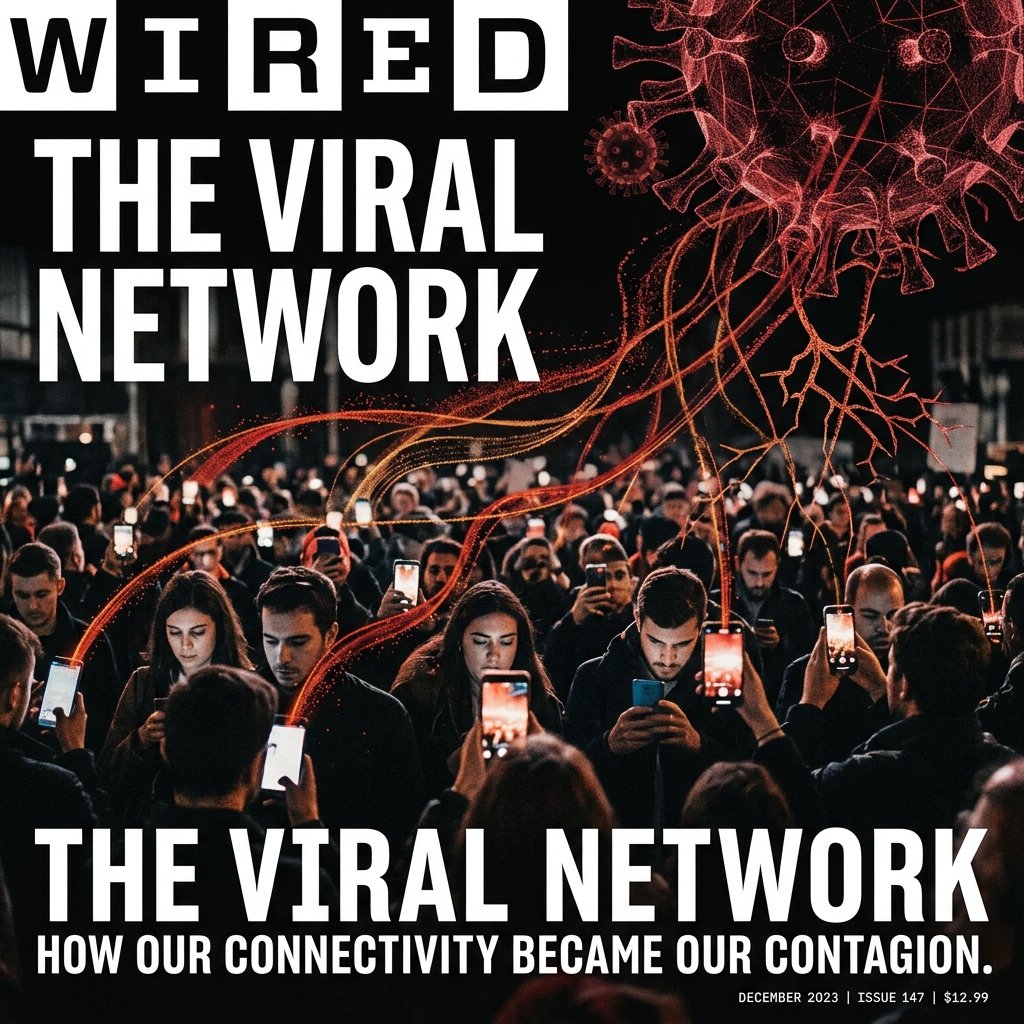
It spreads through algorithms instead of microbes.
It weakens communities rather than immune systems.
It exploits psychology rather than biology.
And unlike every plague that came before it, billions of people voluntarily carry the source of infection in their pockets every day.
The purpose of SocialMediaPlague.org is not to reject technology.
It is to expose systems that profit from addiction, distraction, division, dependency, and the commercialization of human attention.
Awareness is the beginning of resistance.
Attention is the foundation of freedom.
The ability to focus, think, learn, create, love, build, and connect depends upon it.
The fight to reclaim attention may become one of the defining challenges of the twenty-first century.
And the future of our relationships, communities, institutions, and culture may depend upon whether we are willing to confront that challenge honestly.
The plague of our time is not biological.
It is behavioral.
It is digital.
And it is spreading.
The question is not whether social media is changing society.
The question is whether society will recognize the cost before even more of its attention disappears.
References
- American Psychological Association. Health Advisory on Social Media Use in Adolescence.
- Centers for Disease Control and Prevention (CDC). Youth Risk Behavior Survey.
- Centers for Disease Control and Prevention (CDC). Suicide Data and Statistics.
- Haidt, Jonathan. The Anxious Generation: How the Great Rewiring of Childhood Is Causing an Epidemic of Mental Illness.
- Nicholas Carr. The Shallows: What the Internet Is Doing to Our Brains.
- Pew Research Center. Teens, Social Media and Technology.
- Pew Research Center. Americans’ Social Media Use.
- U.S. Department of Health and Human Services. Social Media and Youth Mental Health Advisory.
- U.S. Surgeon General. Social Media and Youth Mental Health Report.
- Peer-reviewed studies on cyberbullying, adolescent mental health, digital well-being, attention fragmentation, social comparison, and technology addiction.